
Master Inbox vs Hothawk: Which one should you choose?
On this page
- Before you compare: Hothawk is not an inbox anymore
- Key differences (the 5 things that matter most)
- Category fit: what these tools are (and what to evaluate)
- Quick verdict (best for, strengths, tradeoffs)
- Side-by-side comparison (category-specific criteria)
- Deep dive: Master Inbox (where it wins / where it doesn’t)
- Deep dive: Hothawk (where it wins / where it doesn’t)
- Pricing comparison (how to think about cost)
- Integrations & workflows (how each fits your stack)
- Implementation & switching (from Hothawk → Master Inbox)
- Common objections (and what’s true)
- Who should choose Master Inbox?
- Who should choose Hothawk?
- 60-second decision checklist
- FAQs
- Final recommendation
Deciding on the right sales engagement and reply management software is a critical choice for any B2B team. In the Master Inbox vs Hothawk debate, you're looking at two fundamentally different approaches to solving the outbound sales puzzle. Master Inbox is a specialized tool designed to unify replies from all your existing outbound channels into one command center, ensuring no lead is ever missed. Hothawk, on the other hand, is an all-in-one AI-powered platform that handles both sending sequences and managing replies.
This comparison is for B2B SaaS founders, SDR/BDR teams, and RevOps leaders who need to decide whether to adopt a best-of-breed, specialized tool for reply handling or an integrated, all-in-one solution for their entire outbound process. We'll break down the features, pricing, and ideal use cases for each to help you make the right call for your team.
Before you compare: Hothawk is not an inbox anymore
As of August 2026, Hothawk has repositioned. Their homepage reads "Cold Email Sequencer", their use cases page targets SDR sending teams, and reply management now lives as a feature tab inside a sending tool. That is a pivot, and it changes this comparison completely: you would be evaluating a support inbox against a sequencer that keeps a reply tab.
Reply management inside a sequencer only sees the email that sequencer sends. No LinkedIn, no inbound form leads, no replies from campaigns running anywhere else, and if you ever switch sending tools, your reply history stays behind. A sequencer with a reply tab is not an inbox.
And if what you actually want is a sequencer, pick one on sending strength. EmailBison is the sequencer we see land in the primary inbox most consistently across client workspaces, which is why it is a first-class Master Inbox integration.
Key differences (the 5 things that matter most)
- Core Philosophy: Master Inbox is a dedicated combined inbox for every reply, focusing on centralizing and managing responses. Hothawk is an end-to-end platform for creating and managing outreach campaigns.
- Integration Model: Master Inbox is built to connect with dozens of best-in-class sequencers. Hothawk is the sequencer itself and integrates primarily with CRMs.
- Problem Solved: Master Inbox solves the problem of missed leads and chaotic reply handling from multiple sources. Hothawk solves the problem of needing multiple tools for outbound sales.
- AI Application: Hothawk heavily leverages AI for content generation and campaign setup. Master Inbox uses automation to streamline reply workflows, such as assigning conversations and sending alerts.
- Ideal User: Master Inbox is for established teams scaling their outbound efforts with a multi-tool stack. Hothawk is for teams looking to consolidate their stack or build an outbound process from scratch.
Category fit: what these tools are (and what to evaluate)
Both tools operate in the Sales Engagement space, but they occupy different niches. To compare them effectively, we'll evaluate them based on these key criteria:
- Unified Inbox Capability: How well does it centralize replies from all channels?
- Sequencer Integration: Does it work with your existing tools or replace them?
- Team Collaboration: How does it facilitate teamwork for handling replies?
- AI & Automation: Where does it use AI and automation to save you time?
- Scalability: Can it grow with your team and campaign volume?
- Pricing Model: Is it based on users, inboxes, or usage?
- Time-to-Value: How quickly can you get it set up and see results?
Quick verdict (best for, strengths, tradeoffs)
| Category | Master Inbox | Hothawk |
|---|---|---|
| Best for | Teams with a multi-channel, multi-tool outbound strategy. | Teams wanting a single, AI-powered platform for all outreach. |
| Biggest strength | Eliminating missed replies by centralizing all communication. | AI-driven campaign creation and end-to-end workflow. |
| Biggest tradeoff | Requires you to have separate sequencing tools. | Locks you into a single ecosystem for sending and replies. |
| Time-to-value | Fast; connects to your existing stack in minutes. | Medium; requires migrating or building new campaigns. |
| Pricing approach | Per-connected inbox, scaling with channel volume. | Per-user/seat, scaling with team size. |
Master Inbox is the clear choice for teams that have already optimized their sending strategy with tools they like and are now facing the bottleneck of managing replies at scale. Hothawk is a better fit for those starting out or wanting to simplify their tech stack with a single, AI-focused solution.
Side-by-side comparison (category-specific criteria)
| Criteria (what matters) | Master Inbox | Hothawk | Notes / proof |
|---|---|---|---|
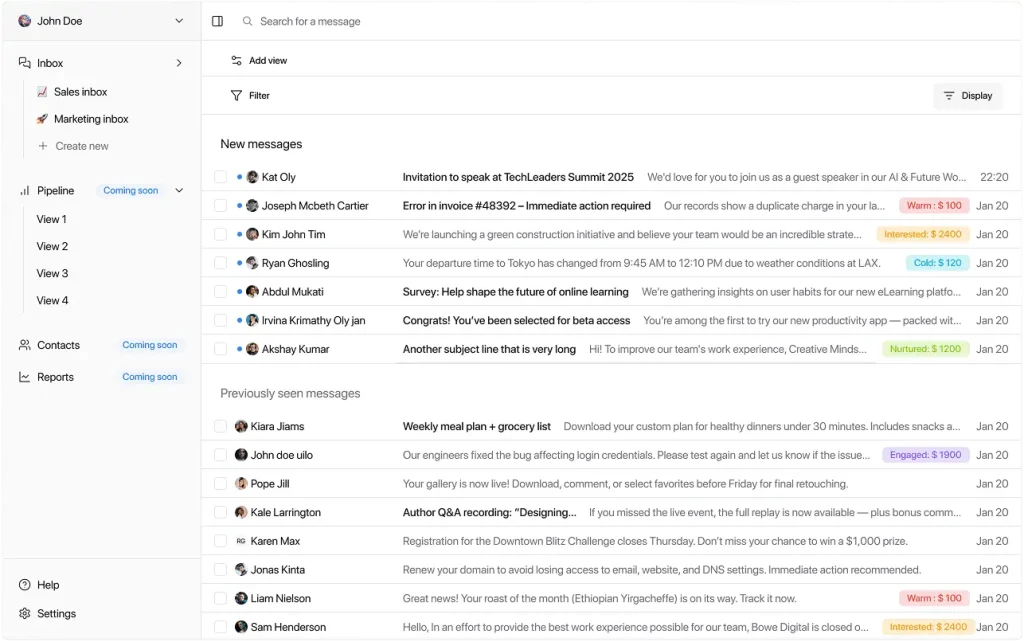
| Unified Inbox | Yes, this is its core function. Centralizes email and LinkedIn. | Yes, but only for campaigns run within Hothawk. | Master Inbox provides a unified master inbox for replies from any connected sequencer. |
| Sequencer Integration | Yes, integrates with Lemlist, Smartlead, Instantly, Expandi, etc. | No, it is the sequencer. | This is the fundamental difference in approach. |
| AI Capabilities | Workflow automation, reply categorization. | AI-powered email writing, sequence building, reply analysis. | Hothawk is built around generative AI for content. |
| Team Collaboration | Assign conversations, internal notes, Slack integration. | Varies by plan, includes standard team features. | Master Inbox's reply handling service is designed for team workflows. |
| Primary Channels | Email & LinkedIn (via other tools). | Email & LinkedIn. | Both cover the primary B2B outbound channels. |
| Pricing Model | Per connected inbox. | Per user/seat. | Cost scales differently based on your team structure and tool usage. |
Deep dive: Master Inbox (where it wins / where it doesn’t)
Strengths
- Never Miss a Lead: Its entire purpose is to consolidate every reply from every channel, solving the #1 problem in scaled outbound: missed opportunities.
- Integrates with Your Stack: You don't have to abandon your favorite tools. It enhances them by creating a Lemlist Master Inbox or connecting to other platforms like HeyReach.
- Streamlined Team Workflow: Assign replies to specific reps, get instant Slack notifications, and track response times to ensure every lead gets a prompt follow-up.
- Single Source of Truth: Eliminates the need for SDRs to constantly switch between different platforms to check for replies.
- Fast Implementation: You can connect your inboxes and sequencers and be operational in under an hour.
- Built for Scale: Whether you have 2 inboxes or 200, the system is designed to handle high volumes of communication without chaos.
Weaknesses / limitations
- Not a Sequencer: Master Inbox does not send emails or LinkedIn messages. It exclusively manages the replies.
- Requires Existing Tools: Its value is directly proportional to the outbound activity you're already running in other tools.
- Focused Feature Set: It does one thing, reply management, exceptionally well, but it is not an all-in-one sales platform.
Ideal use cases
- Lead Generation Agencies: Managing campaigns for multiple clients across various platforms without losing track of replies.
- Scaling B2B SaaS Companies: When your SDR team grows and you add more outbound channels, Master Inbox keeps the process clean.
- Teams Using Best-of-Breed Tools: If you believe in using the best tool for each job (e.g., Smartlead for email, Expandi for LinkedIn), Master Inbox is the layer that ties them together.
Deep dive: Hothawk (where it wins / where it doesn’t)
Strengths
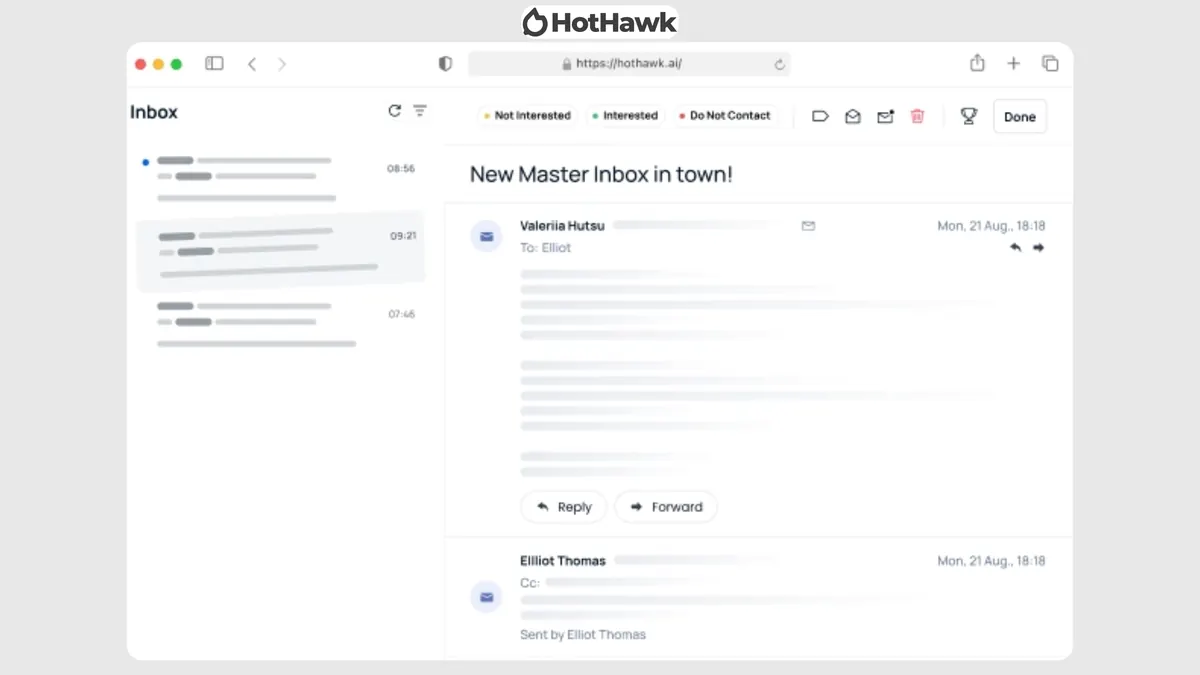
- All-in-One Simplicity: One tool to build campaigns, send messages, and manage replies. This can simplify your tech stack and billing.
- AI-Powered Content: Its AI features can help teams write email copy and build sequences faster, which is great for those without dedicated copywriters.
- Free Tier: Offers a free-forever plan, making it accessible for startups or individuals just getting started with cold outreach.
- Integrated Analytics: Provides a single dashboard to see campaign performance from sending to reply.
Weaknesses / limitations
- Vendor Lock-in: By using Hothawk for everything, it becomes more difficult to switch to a different, potentially better, sequencer in the future.
- Jack of All Trades, Master of None: While it does everything, its individual features may not be as powerful or robust as specialized tools dedicated to sequencing or reply management.
- Migration Effort: Switching to Hothawk requires rebuilding all of your existing campaigns and workflows within its platform.
Ideal use cases
- Startups: Teams building their first outbound sales process who want a simple, integrated solution.
- Small Businesses: Companies that want to consolidate tools to reduce costs and complexity.
- AI-Reliant Teams: Sales teams that want to leverage AI heavily for copywriting and campaign creation.
Pricing comparison (how to think about cost)
The pricing models here reflect the core difference between the products. You can't compare them dollar-for-dollar without understanding what drives the cost.
Master Inbox uses a per-connected-inbox model. According to their pricing page, the cost scales with the number of email or LinkedIn accounts you connect. This is ideal for teams where a few people manage a large volume of outreach channels (like in an agency) or for companies that want to pay based on outreach volume, not headcount.
Hothawk uses a traditional per-user/seat model. The cost scales with the number of salespeople on your team. This is straightforward and predictable for companies that are growing their sales team headcount.
The key question is: what is a missed reply worth to you? Master Inbox's pricing is based on preventing that loss, while Hothawk's is based on enabling a user to perform their job.
Integrations & workflows (how each fits your stack)
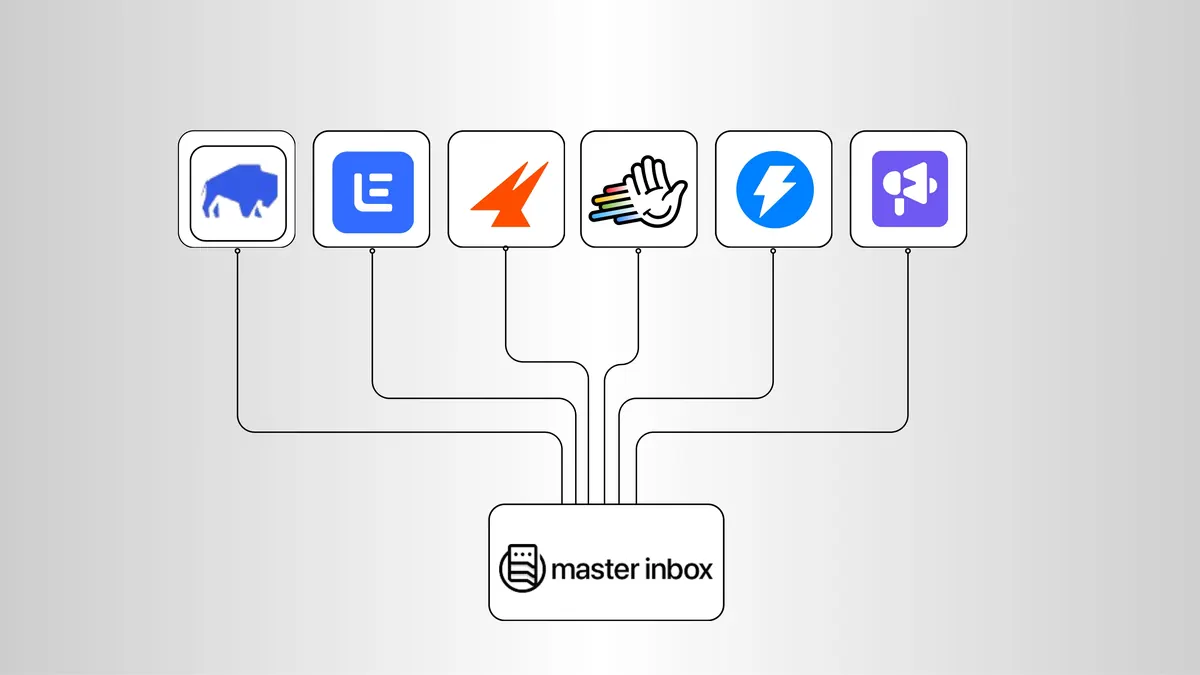
This is where Master Inbox shines. It's built to be the central hub in a modern, multi-channel outbound stack. It integrates natively with a huge range of sequencers, including:
- Lemlist
- Smartlead
- Instantly
- Apollo
- Outreach
- Salesloft
- Expandi
- HeyReach
This allows you to build a powerful, best-of-breed stack and use Master Inbox as the combined inbox to manage all the replies.
Hothawk, being an all-in-one platform, has fewer integrations with other sequencers because it's designed to be the sequencer itself. Its integrations focus on connecting to CRMs like Salesforce and HubSpot to sync lead and contact data.
Implementation & switching (from Hothawk → Master Inbox)
Switching from Hothawk's all-in-one model to a specialized stack with Master Inbox involves unbundling your workflow. You would keep a sequencer for sending and add Master Inbox for reply handling.
- Choose Your Sequencer(s): Decide if you'll stick with one tool for sending or adopt a multi-channel approach (e.g., Smartlead for email, Expandi for LinkedIn).
- Sign Up for Master Inbox: Create your account.
- Connect Your Inboxes: Add the email and LinkedIn accounts you use for outreach.
- Integrate Your Sequencer: Connect Master Inbox to your chosen sending tool(s).
- Set Up Rules: Create rules for auto-assigning new conversations to the correct SDR.
- Configure Slack Alerts: Set up notifications for your team so they can respond to leads instantly.
- Run a Parallel Test: For one week, manage replies in both Hothawk and Master Inbox to ensure a smooth transition.
- Train Your Team: Teach your SDRs the new, simplified workflow of living in one unified inbox.
- Go Live: Deactivate reply handling in Hothawk and make Master Inbox the single source of truth.
Common objections (and what’s true)
My sequencer already has an inbox. Why do I need another?
Sequencer inboxes are often basic and siloed. They frequently miss replies, lose thread context, and make it impossible to get a single view of a prospect who replied on both email and LinkedIn. Master Inbox is built specifically to solve these problems.
Isn't adding another tool just more complexity?
No, it's the opposite. Master Inbox reduces complexity by eliminating the need for your team to constantly log in and out of 3, 4, or 5 different tools to check for replies. It creates one simple, unified workflow.
Why not just use an all-in-one like Hothawk?
Specialized, best-of-breed tools are almost always more powerful than the individual components of an all-in-one. By combining a top-tier sequencer with a top-tier reply management tool like Master Inbox, you get a more robust and scalable system.
Is it worth the cost?
The better question is, what is the cost of a single missed demo from a qualified lead? When you consider that, the investment in a tool that ensures you never miss a reply often has an immediate and significant ROI. The value is tied to not losing revenue, as explained on the Master Inbox pricing page.
Does it work with my specific tool, like HeyReach?
Yes. Master Inbox has a wide range of native integrations, including a dedicated HeyReach + Master Inbox connection, to ensure it fits seamlessly into your existing stack.
Who should choose Master Inbox?
- Sales teams using two or more outbound sequencing tools.
- Lead generation agencies managing campaigns for multiple clients.
- Companies scaling their SDR team from 2 to 10+ reps.
- RevOps leaders who need to standardize the reply handling process.
- Anyone who has ever lost a deal because a reply was missed in a cluttered inbox.
- Teams that want to empower their SDRs to focus on selling, not on administrative tasks.
- Users of Lemlist, Smartlead, Instantly, Expandi, or other popular sequencers.
Who should choose Hothawk?
- Startups and small businesses building their first outbound process.
- Teams that want to consolidate their tech stack into a single platform.
- Users who prioritize AI-powered email writing over everything else.
- Companies with simple, single-channel outbound strategies.
- Individuals or solopreneurs who need a free or low-cost entry point to sales engagement.
60-second decision checklist
- Do you currently use more than one tool for outbound sending? (Yes → Master Inbox)
- Is your primary goal to simplify your tech stack into one tool? (Yes → Hothawk)
- Is your biggest pain point missed replies or disorganized follow-up? (Yes → Master Inbox)
- Do you need an AI to help you write your email copy? (Yes → Hothawk)
- Do you have a team of SDRs managing replies? (Yes → Master Inbox)
- Are you building a sales process from scratch? (Yes → Hothawk)
- Do you already have sequencers you are happy with? (Yes → Master Inbox)
- Is budget your absolute primary concern? (Yes → Hothawk's free plan)
FAQs
What is Master Inbox?
Master Inbox is a specialized software that creates a unified inbox for all your sales replies. It integrates with your existing email and LinkedIn sequencing tools to centralize communication and ensure no lead is ever missed.
What is Hothawk?
Hothawk is an all-in-one, AI-powered sales engagement platform. It helps you write emails, build multi-channel sequences, send campaigns, and manage replies within a single application.
Does Master Inbox send emails?
No, Master Inbox does not send emails or LinkedIn messages. It is a dedicated reply management platform that integrates with the tools you already use for sending.
How does Master Inbox pricing work?
Master Inbox is priced per connected inbox per month. This means the cost scales with the volume of your outreach channels, not the number of users on your team.
Can I use Master Inbox and Hothawk together?
Yes. You could use Hothawk as your sequencer for sending campaigns and then connect it to Master Inbox to manage the replies, giving you the benefit of Hothawk's AI content creation and Master Inbox's powerful reply handling.
What is the main difference between Master Inbox and Hothawk?
The main difference is specialization vs. consolidation. Master Inbox is a specialized, best-in-class tool for one crucial job: reply management. Hothawk is a consolidated, all-in-one tool that handles the entire outbound process.
Final recommendation
Choosing between Master Inbox and Hothawk comes down to a strategic decision about your sales tech stack. If you're looking for a single, simple, AI-driven platform to get an outbound process off the ground, Hothawk is a solid contender. It consolidates your workflow and can help you get started quickly.
However, for teams that are serious about scaling their outbound efforts and maximizing their conversion rates, the choice is clear. A specialized, best-of-breed approach will always outperform an all-in-one. By combining top-tier sequencers with Master Inbox's dedicated reply handling service, you create a more powerful, flexible, and scalable system. You solve the most expensive problem in outbound sales, the missed reply, and empower your team to focus on what they do best: closing deals.